Third Digital Challenge Project Activity Held in Idvor
For nine days in July, Idvor once again became a place where knowledge went far beyond formulas on a board and learning continued long after the workshops had ended. From 8 to 17 July 2025, the village hosted the 15th “Mihajlo Pupin” Science and Education Camp, with part of its programme dedicated to the third activity of the Erasmus+ project Digital Challenge / Digitalni Izazov.
Bringing Outstanding Young Talents Together
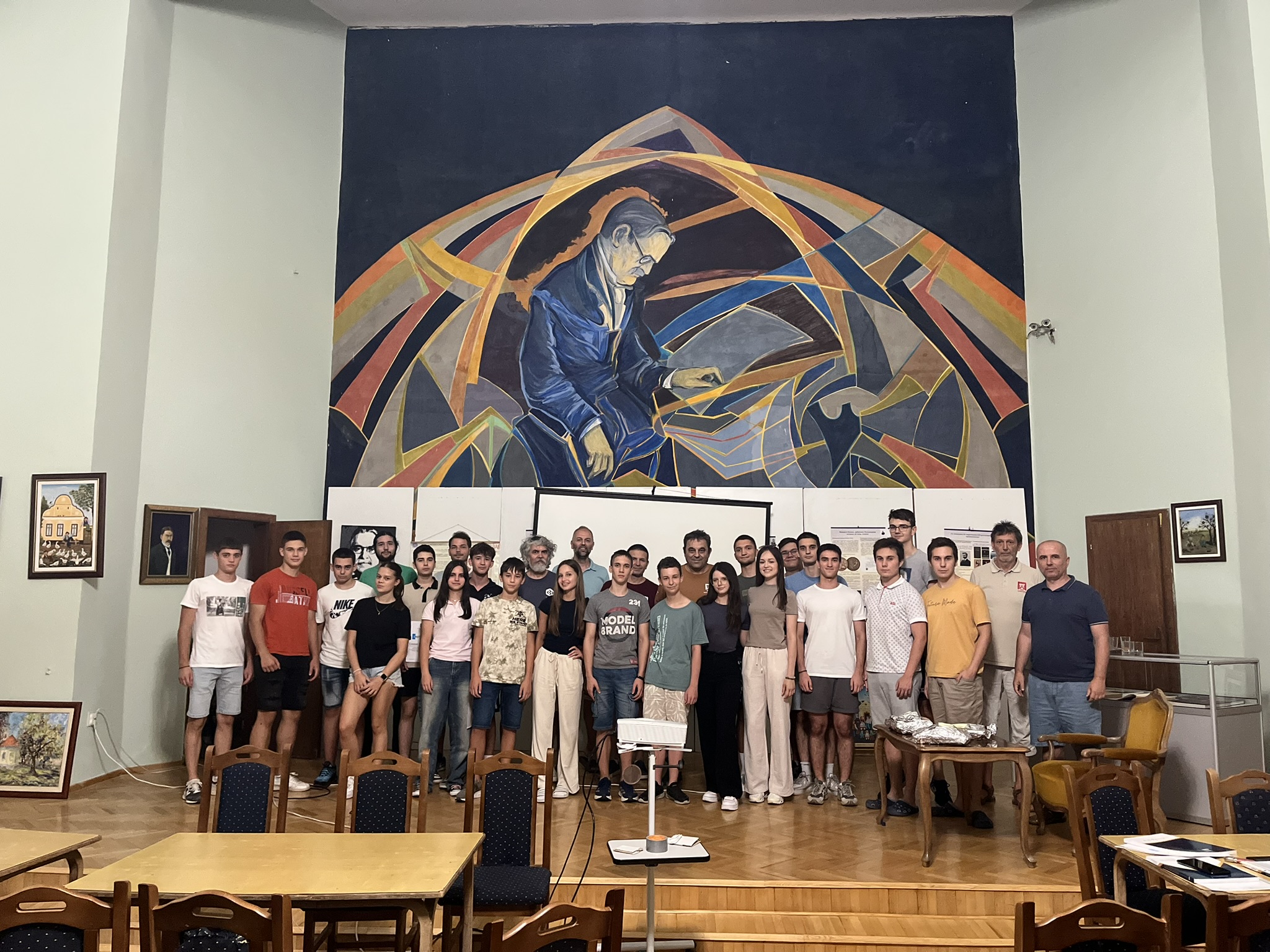
The camp was organised by the “Mihajlo Pupin” Regional Centre for Talents in Natural and Technical Sciences from Pančevo, bringing together talented students from Serbia and the wider region.
Among them were winners of international physics competitions—young people who had already demonstrated how far knowledge, perseverance and curiosity can take them. They were joined by Digital Challenge participants, creating an environment in which knowledge was not kept to oneself but shared every day.
For the Digital Challenge participants, this was an opportunity to work alongside some of the region’s most talented young physicists, discover new ways of thinking and significantly improve their knowledge. At the same time, the digital skills, programming experience and project-based approach they brought opened new possibilities for everyone involved.
From an Idea to a Solution That Really Works
Following the methodological and mentoring preparations in Timișoara, Idvor provided the perfect setting for putting ideas directly into the hands of students.
Activities specifically connected to Digital Challenge took place on 8, 15 and 16 July, while students participated in workshops, practical assignments, teamwork and discussions with mentors throughout the entire camp.
Programming, electronics, sensors, microcontrollers and modelling were not treated as isolated subjects. Students combined them to develop projects and solutions inspired by real-world problems and everyday life. There were attempts, mistakes, fresh starts and new ideas—the very process through which both genuine knowledge and meaningful innovation are created.
Knowledge Grows Faster When Young People Share It
One of the camp’s greatest strengths was the atmosphere in which students naturally supported one another. More experienced participants explained procedures, demonstrated solutions and encouraged younger students to try again.
This brought the Digital Challenge model to life: connecting students, junior mentors and senior mentors. The aim is not only for young people to acquire new knowledge, but also to develop the confidence and skills to pass it on to others.
The camp also helped identify students ready to take on more active roles in future workshops as junior mentors and programme assistants.
Digital Challenge Reaches the Wider Community
Participation in the camp was also important as a genuine example of project dissemination. Digital Challenge moved beyond the immediate circle of project partners and presented its methods, experience and results to a wider scientific and educational community.
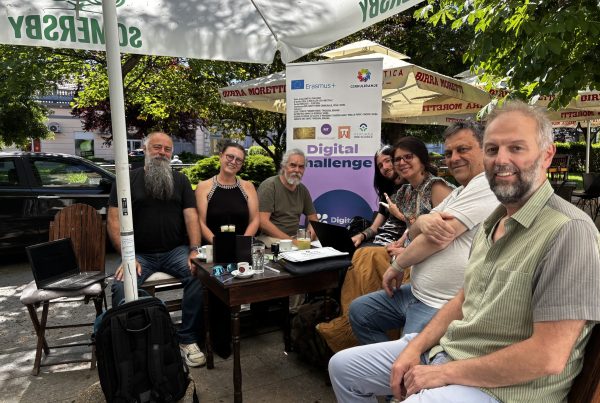
Students and mentors from Serbia, Romania and other parts of the region learned together, exchanged ideas and demonstrated that high-quality STEM education can cross the boundaries between schools, cities and countries.
Bringing Digital Challenge participants together with young people already achieving results in international competitions raised the level of knowledge across the entire group. At the same time, it opened the project to new students, mentors and organisations.
Preparing for What Comes Next
The experience gained in Idvor provided excellent preparation for the upcoming student activities in Timișoara, as well as for later workshops and the continued development of student projects.
Ideas, assignments and approaches tested during the camp were later used to improve educational materials, programming tasks, the mentoring model and practical activities within the Digital Challenge programme.
Connecting Digital Challenge with the science and education camp proved to be a model capable of producing tangible results. We therefore plan to make this type of cooperation a permanent practice and part of future editions of the camp.
A Story That Reached a Wider Audience
The importance and atmosphere of the camp were also recognised beyond the project itself. RTV Pančevo reported on the camp’s opening, while some of the atmosphere and activities involving young people were captured in a video report.
The story of the young talents gathered in Idvor was also covered by Radio Television of Vojvodina. The “Mihajlo Pupin” Regional Centre for Talents published an overview of the activities, while Pančevac shared participants’ impressions and the results of another successful camp.
This media coverage allowed the Digital Challenge idea—built around practical learning, mentoring and regional cooperation—to reach a much wider audience.
More Than a Project Activity
Participation in the camp was organised as an additional contribution from the partners, outside the approved Erasmus+ budget. Its true value, however, cannot be measured only by the number of workshops, completed assignments or developed projects.
We are proud of these young people—not only because of their knowledge and achievements, but also because of their energy, curiosity and the way they looked after one another. We played volleyball with them well past midnight, discussed ideas long after the official programme had ended and smiled as we watched them quietly prepare, thinking no one had noticed, to welcome the sunrise together.
Idvor gave us more than new projects and future junior mentors. It also gave us genuine friendships—the kind that remain long after the equipment has been packed away and everyone has returned home. Moments like these remind us that Digital Challenge is not only building knowledge. It is bringing together the people who will carry that knowledge forward.